
The purpose of this endowed scholarship fund is to support students from outside Jordan to travel to and do research in Jordan, with a preference for archaeological research (including excavation). The scholarship recognizes that it is expensive and difficult for students to meet personal research goals or degree program requirements without external support. Funded students should be engaged in partnership with Jordanian researchers and/or communities on projects that help discover, document, preserve, understand, or celebrate Jordan’s rich cultural heritage. Awardees are the rising stars in a long-term collaboration among Jordanians and other nationalities that supports local efforts to protect and share Jordan’s history. To encourage travel to and engagement in Jordan, the award is available to all non-Jordanians. Recipients must be actively enrolled in a graduate or undergraduate program.
Required application materials include:
- Completed application form
- Academic review (either a letter from a project director confirming acceptance into an ongoing field or study project or, in the case of an independent research project, proof that your research has been accepted by ACOR or another academic institution as a scholarly and ethical project)
- Project proposal narrative (up to 2,000 words, not including bibliography)
- Transcript(s) (first-year graduate students should submit both graduate and undergraduate transcripts)
- One recommendation
Background of the Clark Scholarship
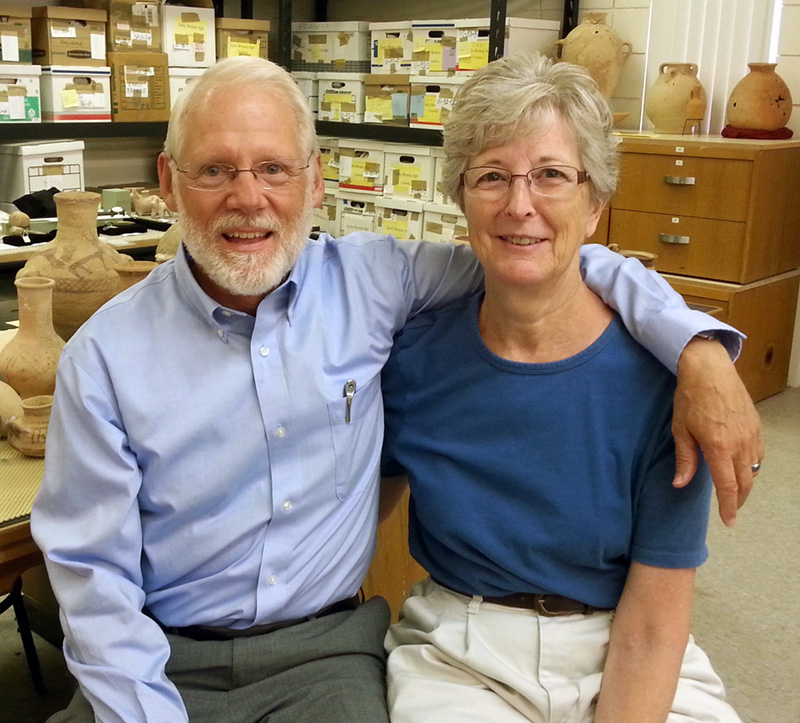
Carmen L. and Douglas R. Clark have been connected to Jordanian archaeology for more than 50 years and are establishing this endowed fellowship in 2026 to enable students to participate in archaeological research in Jordan long into the future.
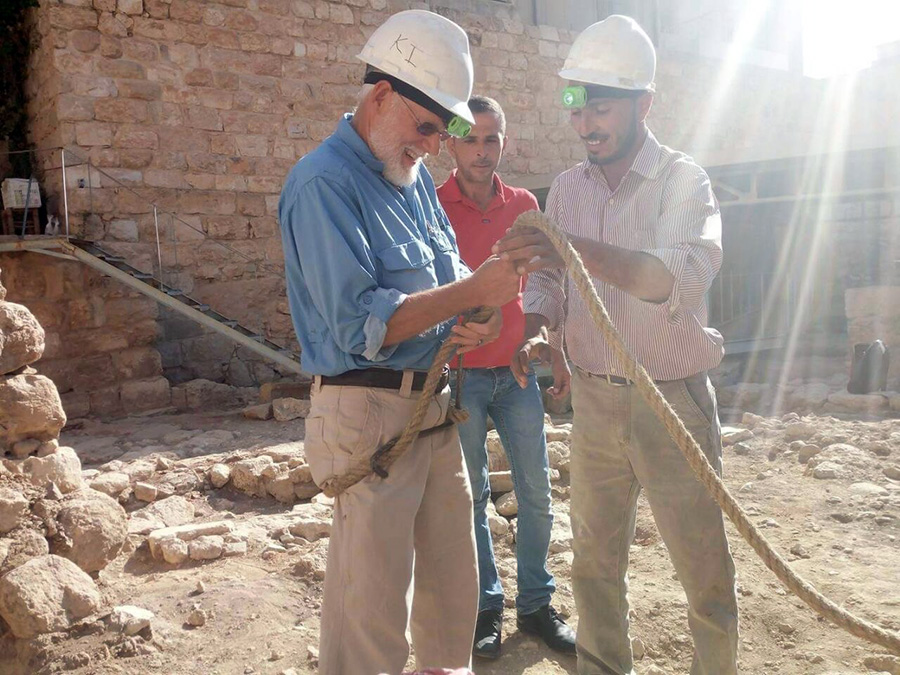
Doug Clark began excavations as a graduate-student volunteer at the site of Tall Hisban in 1973. Two summers there were followed by 18 excavation seasons at Tall al-‘Umayri, part of the Madaba Plains Project (MPP), over the time span of 1984–2016. There he served as field supervisor, consortium director, co-director, and director. From 2015 to the present he has collaborated with Suzanne Richard, Andrea Polcaro, Marta D’Andrea, and Basem Mahamid as co-director of the Madaba Regional Archaeological Museum Project (MRAMP), fielding four excavation seasons and investing nearly $1 million of grants in developing a robust community archaeology endeavor that taught, trained, and built capacity for hundreds of individuals, mostly from in and around Madaba and the Department of Antiquities. He also spent major parts of two years at ACOR (1999 and 2002), supported by NMERTA and CAORC fellowships. Now retired for the second time, he created a new and unpaid position for himself at the Lawrence T. Geraty and Douglas R. Clark Center for Near Eastern Archaeology at La Sierra University in Riverside, California, (which, with the engagement of numerous local partners, he established in 2012); there he is now a senior research scholar, tasked with research and publication of remaining MPP and MRAMP seasonal and final reports.
Carmen Clark has also been involved in the archaeology of Jordan, initially vicariously through Doug, even if she agreed to send their 14-year-old son for the excavation season in 1987. But she traveled throughout Jordan numerous times in the 1990s and 2000s and again in 2022 (with a total of 17 members of the family, including almost all descendants along with others). Her archaeological experience began with one day of excavation in 1999 in the narthex of the Blue Chapel in Petra under Patricia Bikai. In addition, she spent two full seasons at Tall al-‘Umayri (2002 as a volunteer, in administration of the project, and in the artifacts lab; and in 2006 in the field and as registrar of objects and artifacts). During Doug’s fellowships at ACOR, Carmen was there as well, in 1999 and 2002, helping ACOR with administrative tasks and sewing the Syria-sourced black-and-white tablecloths that graced the ACOR dining room for years, having purchased an old electric sewing machine in downtown Amman with the help of Said Adawi to make them.
To donate to this fellowship, please click here and write “Clark” under the “Additional Details” section of the donation form.
Click here to apply for this fellowship.