
12 March 2026
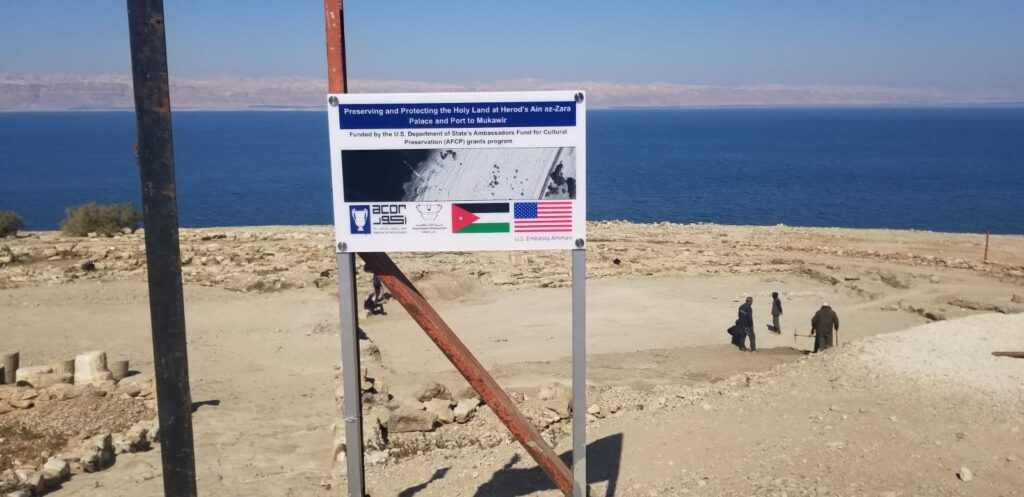
In late 2023, in collaboration with the Department of Antiquities, ACOR undertook new survey and excavation on the northeastern shore of the Dead Sea at ‘Ain ez-Zara, site of an ancient harbor and palace (villa maritima) known in antiquity as Kallirhoe. Work resumed here in September 2025 with the “Preservation and Protection of the Holy Land at Herod’s Ain az-Zara Palace and Port to Mukawir” project, funded through a significant two-year (2025–2027) grant from the U.S. Department of State’s Ambassadors Fund for Cultural Preservation (AFCP) and the United States Embassy in Amman. This grant also provides support for enhanced anti-illicit trafficking trainings (carrying on work begun under previous grants from the State Department) and for ensuring that the American public has access to and information about the Holy Land in Jordan.
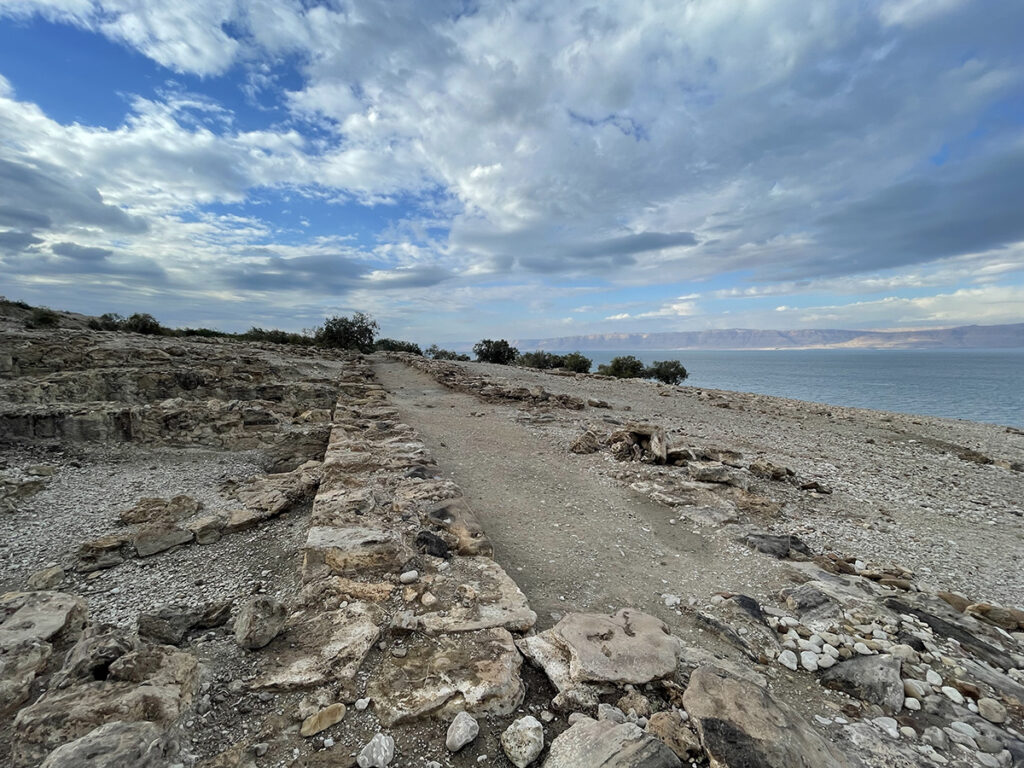
The ancient place name, meaning “Beautiful Stream,” derives from the thermal springs, believed to be therapeutic, in the area. Because cliffs abut the Dead Sea’s eastern shoreline, and there are no known roads, watercraft provided access to these waters and to Machaerus (Mukawer), a well-known Roman-era citadel to the east, making a harbor indispensable. Although the mountaintop fortress has been the subject of extensive excavation and publication, the site of ‘Ain az-Zara has received little previous attention, just a few weeks of work by German and Jordanian projects since the 1980s.
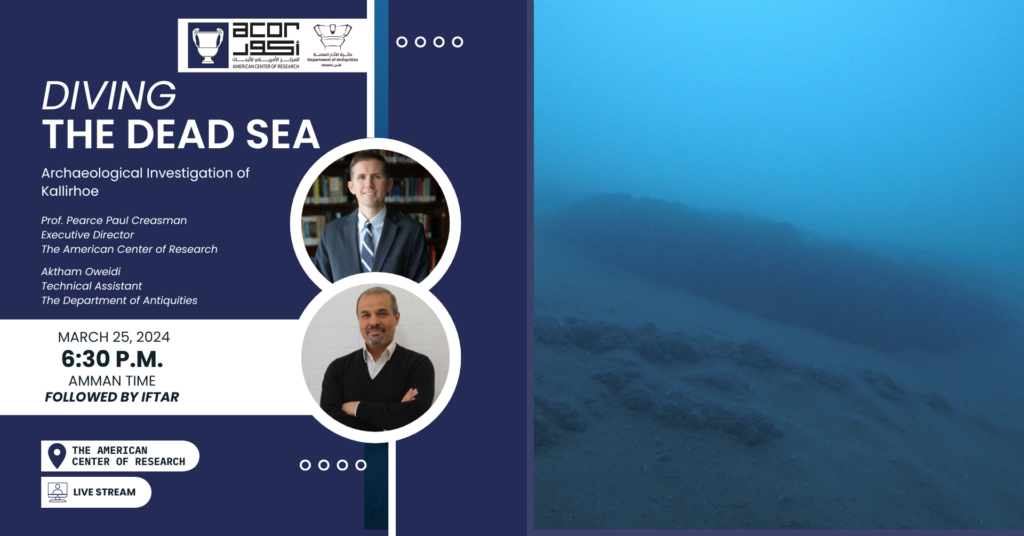
Our initial survey and excavation in 2023 identified what is likely an ancient spring that served the harbor’s market, waterworks, and new structural components of the port. Below the waters of the Dead Sea, highly experienced archaeological divers undertook limited excavation. While no remains from the Hellenistic or Roman era were discovered, they did find features of interest, one of which may be a stone Neolithic (7000–5000 BCE) structure that likely once stood near the waterline of that time.
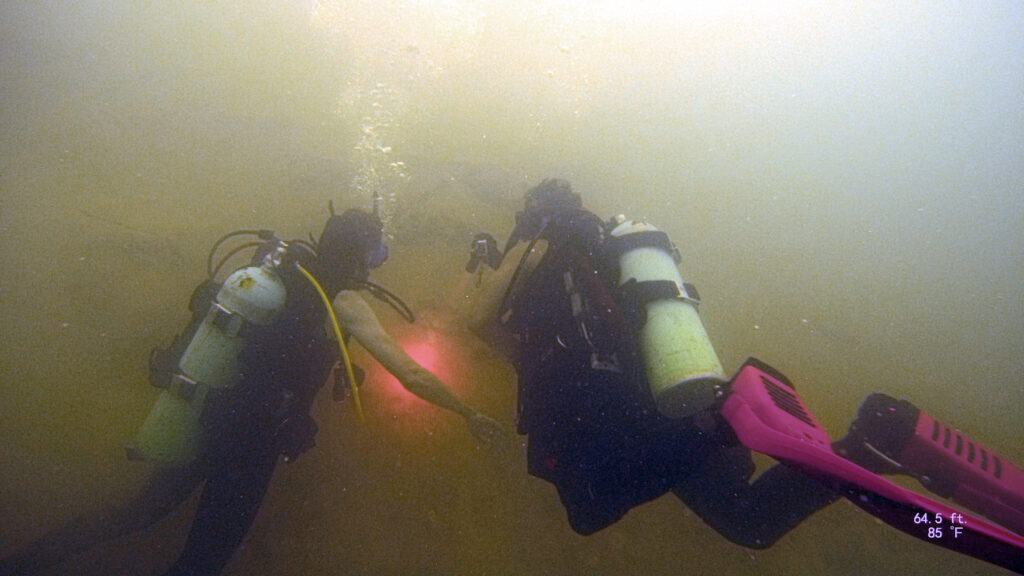
We also conducted trainings for Department of Antiquities staff in remote sensing, surveying, and maritime archaeology, supported in part by our Sustainable Cultural Heritage Through Engagement of Local Communities Project.
As so often happens in archaeological work, we came away with more questions than answers.
The State Department’s grant for Preservation and Protection of the Holy Land at Herod’s Ain az-Zara Palace and Port to Mukawir allowed us to pursue those questions in November 2025. The primary aim of the project is the excavation and conservation of the Hellenistic and Roman-era remains and to install pathways and signage to allow the public to visit the site, which witnessed events critical to the development of the modern world.
Follow us on social media or join our mailing list to receive updates and events about all aspects of this important project.



To Learn More:
Lectures:
Articles:
Creasman, Pearce Paul, Aktham Oweidi, Jehad Haron, Justin Schneider, Frederick Fidler, and Randall Parker. 2024. “Excavating the Dead Sea Harbor at Kallirhoe/‘Ain ez-Zara.” ACOR Newsletter 35.2: 1–4. (Download.)
Creasman, Pearce Paul, and Noreen Doyle. 2026. “Preservation and Protection of the Holy Land in Jordan at the Dead Sea.” ACOR Newsletter 37.2: 3.
About Machaerus:
Vörös, Győző. 2024. Mount Machaerus: An Introduction to the Historical, Archaeological, and Pilgrim Site Overlooking the Dead Sea in the Kingdom of Jordan. Amman: The American Center of Research. (Download.)